ABSTRACT
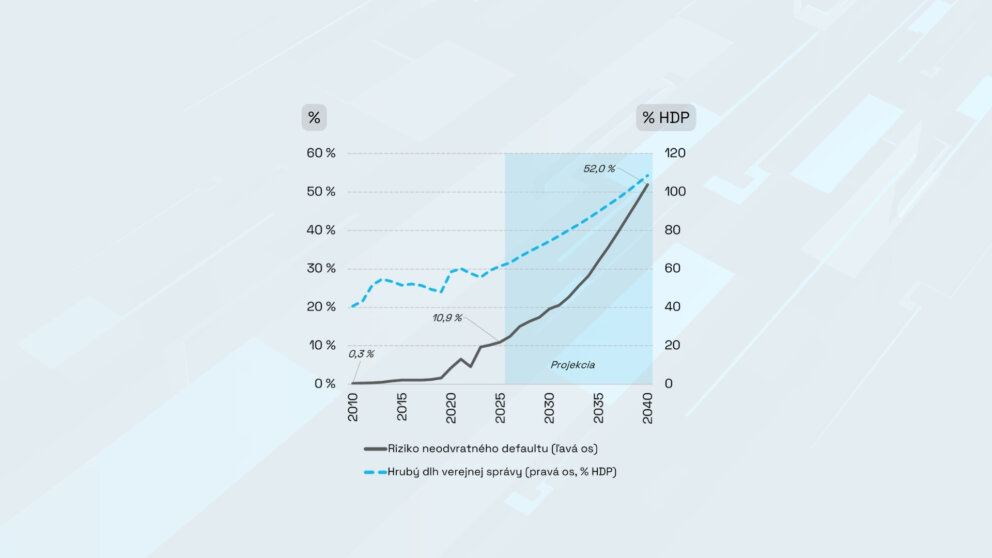
This paper estimates a fiscal-limit model for Slovakia that integrates deterministic demographic ageing and replicates past government debt dynamics. Sovereign default is treated as the consequence of the government’s inability to satisfy the intertemporal budget constraint. Bayesian estimation of model parameters allows the fiscal-limit distribution to reflect underlying economic and fiscal fundamentals. The paper introduces two summary indicators: debt thresholds associated with given probabilities of unavoidable default; and unavoidable default risk at the current debt level. It also outlines a framework for forecasting and decomposing these indicators. The results show that demographic ageing and the current level of public debt are the main drivers of long-run unavoidable default risk. The model-based safe debt level associated with a 5% probability of unavoidable default declines from 105.9% of GDP in 1999 to 46.3% in 2024. Since observed public debt in 2024 is already above this level, the model implies that stabilising debt at current levels would not be sufficient to restore a low-risk fiscal position. Because demographic ageing enters the model deterministically through transfers, lowering unavoidable default risk would require a lower debt-to-GDP ratio.
KEYWORDS: sovereign default; fiscal sustainability; fiscal limit; demographic ageing